Bath textiles · Practical guide
The Case for Waffle-Weave Linen Towels in a Small Bathroom
In a compact bathroom, a towel has to do more than dry. It must fit the hook, handle a humid room, and be ready again without taking over the shelf. Waffle-weave linen brings a distinctive texture and a relatively light profile to that daily equation—but the right choice depends on size, airflow, care habits, and the feel you prefer.
Published October 16, 2026
A small bathroom makes ordinary objects feel consequential. A towel left damp on a crowded rail can occupy the whole visual field. A thick stack can consume a shelf meant for other necessities. And when ventilation is limited, fabric that stays wet for a long time may be inconvenient, no matter how inviting it feels straight from the linen cupboard.
This is where waffle-weave linen deserves a closer look. The fabric’s gently raised cells create a surface that feels different from smooth, flat-woven cloth or dense terry. In a towel, the weave adds texture and gives the fabric room to move and fold. Pure linen brings its own character: a natural hand, a tendency to soften with use, and a lighter feel than many plush towels.
None of those features makes one towel universally best. Waffle-weave linen is a practical option to consider, not a shortcut around the basics of towel care. Its usefulness depends on the towel’s dimensions and construction, how much moisture it must absorb, where it can hang, and whether the bathroom allows damp textiles to dry between uses. Understanding those details can help a small space feel more orderly—and make a daily routine work a little better.
What makes a waffle weave different?
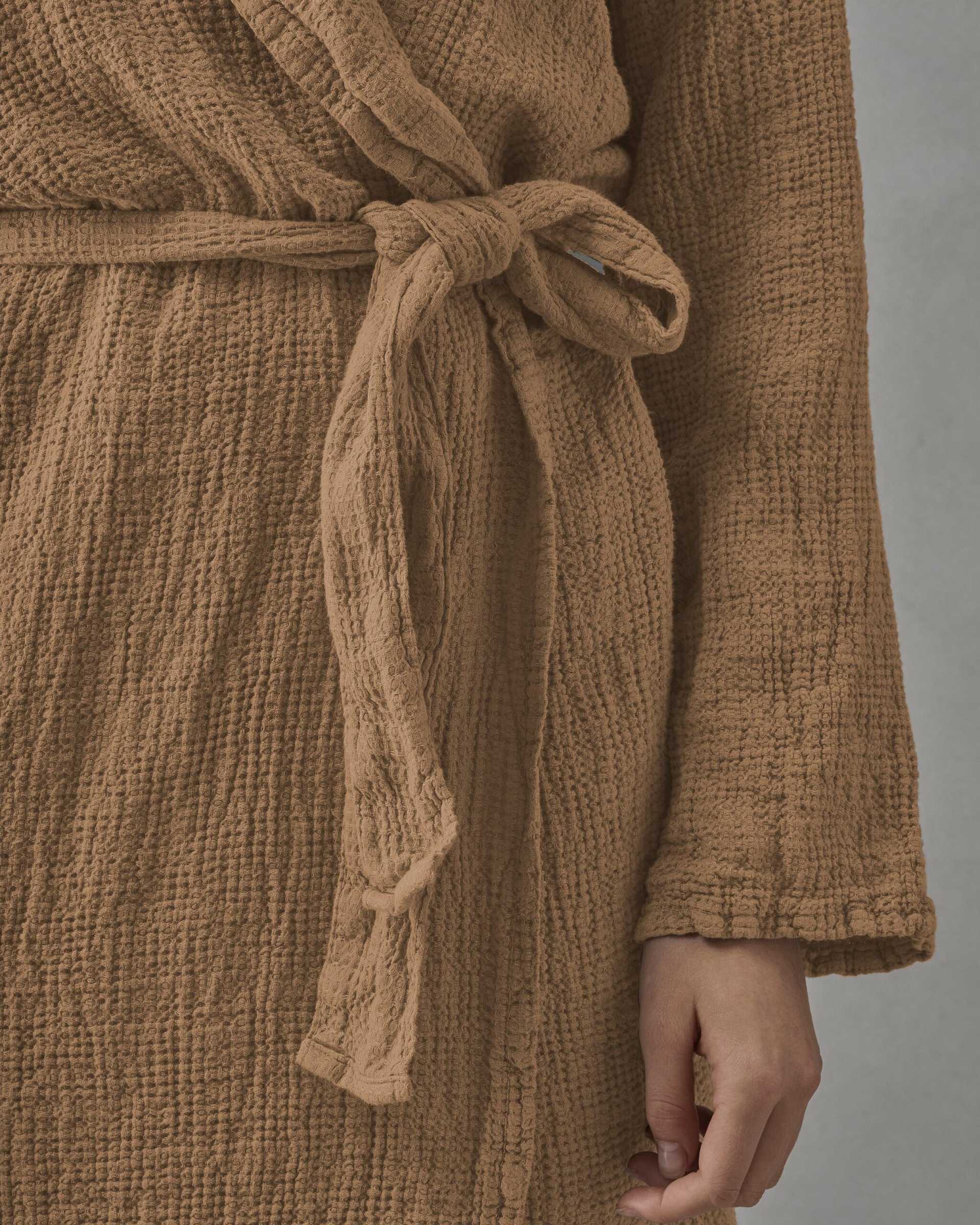
Look closely at waffle fabric and its surface appears to hold a quiet pattern of ridges and recessed squares. Those raised and lowered areas give the cloth its three-dimensional character. The structure is not simply decoration: it changes how the towel feels in the hand and how it lies when folded or hung.
Compared with a smooth weave, the textured surface offers more variation where the towel meets skin. Some people enjoy the light, gently tactile sensation; others prefer the enveloping softness of a thick terry towel. Texture is personal, so a towel’s description can only go so far. If possible, feel the fabric before choosing, or begin with one towel rather than replacing an entire household set.
Waffle construction is often associated with lighter, less bulky towels. That can matter in a bathroom where hooks, rails, and cupboards are at a premium. Folded, a lighter towel may take up less room than a substantial plush one, and on a hook it may feel less cumbersome. Actual thickness and weight vary by product, however. “Waffle weave” describes a construction, not a guarantee that every towel will have the same density, drying behavior, or compactness.
Pure linen waffle towels bring together the weave’s surface texture and linen’s distinctive character. Linen is made from flax fiber. Depending on its construction and finish, it can feel crisp at first and become more supple with laundering and use. The fabric’s appearance may remain naturally relaxed rather than uniformly smooth—a quality some households value as part of its everyday appeal.
Absorbency is only part of the story
A bath towel needs to take up water comfortably, but shoppers often treat absorbency as a single, simple measure. In practice, the experience depends on several factors: the fiber, the weave, the towel’s size and weight, its finish, and how it is used. A towel that feels highly absorbent to one person may feel less plush or familiar to someone accustomed to thick cotton terry.
The waffle texture is commonly chosen for its combination of surface and lightness. In pure linen towels, the raised structure can provide a pleasant tactile feel while the cloth handles moisture. Yet a lighter towel will not necessarily feel like a heavy, densely looped towel, and neither description tells you exactly how much water a particular towel will hold. Personal preference matters, as does the way a towel is used: a quick hand-dry is a different task from drying long hair or wrapping up after a bath.
Consider your routine before interpreting product claims. If you like a towel that feels substantial and cushioned, a very light waffle style may not be your preferred bath towel. If you want something that folds easily, hangs without a bulky drape, and gives the bathroom a less crowded feel, its profile may be an advantage. For a household with varied preferences, keeping one plush towel alongside a lighter linen option can be a sensible way to test what works.
New linen may also feel different from linen that has been washed repeatedly. Its hand can change over time, and the way it absorbs may feel more familiar after use. Follow the maker’s care instructions rather than trying to soften the fabric aggressively. Harsh washing, excessive heat, or products that leave residues may affect the fabric’s feel and performance. Patience and ordinary laundering are usually better guides than expectations that a new towel should feel exactly like a well-worn one from the first day.
Drying in a humid room
In a small bathroom, the towel’s life after use can be just as important as the moment it touches the skin. A towel needs air around it to release moisture. If it is folded over a narrow hook, pushed behind a door, or layered beneath another damp textile, even a lighter fabric may take longer to dry than expected.
Waffle-weave linen is often selected for a light feel and a less bulky presence. Those qualities can make it easier to spread across a rail or hang from a hook without creating a heavy-looking bundle. The open spaces and textured surface are part of the fabric’s construction, but drying time is affected by the whole room. Air circulation, humidity, towel size, washing conditions, and how fully the towel is opened all play a role.
Start with the simplest adjustment: give the towel as much exposed surface as the room allows. Spread it across a rail rather than folding it into several layers. If hooks are the only option, hang the towel loosely and make sure it is not pressed against a wall or another damp item. When possible, open a window or run an exhaust fan during and after bathing. Even a small increase in airflow can help reduce the lingering dampness that builds up in a compact room.
Pay attention to the towel’s condition between uses. A textile that is still damp when needed again may be a sign that the bathroom needs better ventilation, that too many towels are sharing one rail, or that the towel is not being spread out enough. Rotating between two towels can give each more time to dry, a particularly useful practice in a household where the bathroom is used frequently.
Quick-drying claims should be treated as one consideration, not a promise that replaces good hanging habits. A towel cannot dry well if moisture-laden air has nowhere to go. In homes with persistent condensation or limited ventilation, addressing airflow is a more durable solution than relying on fabric choice alone.
Choose dimensions for the room you have
Before choosing a set, measure the available hanging and storage space. Bath towels, hand towels, and guest towels do not serve identical roles, and the largest option is not always the most useful in a compact bathroom. A generous bath towel can feel comfortable after a shower, but it needs a rail or a place to spread. A smaller towel may be easier to hang and store, but it may not offer the coverage you expect.
Think through the path from shower to towel storage. Is there a full-length rail, or only a hook on the back of a door? Can the towel hang without brushing the floor? Does a shelf allow folded towels to sit in one layer, or will a thick stack be difficult to reach? These practical questions help narrow the choice more reliably than color or decorative styling alone.
- For daily bathing: Choose a size that provides comfortable coverage and can be spread adequately in the room.
- For hand drying: A smaller towel can be easier to place near the sink and replace regularly.
- For guests: Keep a clean towel easy to find without storing an oversized stack in a cramped cupboard.
- For shared bathrooms: Consider whether each person has a distinct hook or rail space, so damp towels do not overlap.
Color and texture can influence the sense of space, too. A restrained palette may help a compact bathroom feel calmer, while waffle texture adds visual interest without requiring a large decorative footprint. But the most successful choice is the one that fits the room’s routine. A beautiful towel that has nowhere to dry can become a source of daily frustration.
Care that protects the fabric
Linen towel care begins with the instructions supplied for the particular textile. Fiber content, dye, finish, and construction can all influence the recommended wash temperature and drying method. If the care label says to use a gentle cycle, follow it; if it gives a maximum temperature, do not assume that hotter is better. A consistent, moderate routine is usually kinder to textile fibers than repeated harsh treatment.
Wash towels before their first use if the maker recommends it, and sort them by color to help avoid unwanted dye transfer. Avoid packing the machine so tightly that towels cannot move freely. Overloading may prevent an even wash and rinse, leaving residue that affects the fabric’s feel. Use an appropriate amount of detergent for the load and water conditions. Too much detergent is not necessarily more effective and may be difficult to rinse out completely.
Fabric softener is not automatically helpful. Some softeners leave a coating on fibers that can change how towels feel and absorb. Check the care guidance for your towel and skip additives that the maker advises against. Likewise, bleach and stain treatments should be used only when they are compatible with the textile and its color. Strong products can weaken or discolor fabric over time.
When drying, avoid excessive heat and prolonged over-drying unless the care instructions specifically allow it. If line-drying is practical, provide good airflow and hang the towel fully open. If using a dryer, choose the setting recommended on the label and remove the towel once it is dry. A little natural rumpling is part of linen’s relaxed character; ironing is usually a matter of preference, not a requirement for a towel meant for everyday use.
For routine freshness, make sure towels dry thoroughly between uses and launder them according to household needs. A persistent musty smell is a signal to reassess drying and washing habits rather than simply masking the odor. Check that towels are not left crumpled in a hamper while damp, and allow the bathroom to air after showers. Small changes in handling can support both comfort and fabric longevity.
A small-space towel routine
The simplest system is often the one that is easy to maintain. Keep only the number of towels the household can dry and store comfortably. Place everyday towels where they can be hung open, and reserve a separate, dry spot for clean replacements. If the cupboard is shallow, roll or fold towels in a way that suits its dimensions rather than forcing a tall stack into a narrow shelf.
After bathing, spread the towel immediately instead of leaving it in a heap. If the room remains humid, run ventilation or leave the door open when practical. Once dry, return the towel to its usual place or move it to the laundry basket according to your routine. These steps do not require special equipment, and they reduce the chance that damp fabric will remain hidden in a corner.
It can also help to give towels distinct jobs. A hand towel near the sink may need more frequent laundering than a bath towel, while a guest towel might be kept apart until needed. In a small home, this kind of simple organization prevents clean and used textiles from competing for the same limited space.
Waffle-weave linen is not a solution to every bathroom constraint. It cannot create ventilation, enlarge a cupboard, or suit everyone’s idea of softness. Its appeal lies in the combination of texture and a relatively light profile, which can make it a thoughtful option for rooms where bulky textiles are difficult to manage. The best result comes when the fabric fits both the space and the people who use it.
Questions to ask before choosing
When comparing linen bath towels, look beyond a single feature. Read the fiber and care information closely. Confirm that the towel is made from linen if pure linen is important to you, and distinguish a waffle construction from a waffle-like surface or a blended fabric. If dimensions and weight are listed, compare them with the towels you already use and the storage space available at home.
- Does the size suit the way the towel will be used?
- Can it hang open in the bathroom, rather than staying folded over itself?
- Does the stated fiber content match your preference for pure linen or a blend?
- Are the washing and drying instructions compatible with your household routine?
- Do you enjoy the textured feel, or do you prefer a plush, looped towel?
- Is there enough airflow for the towel to dry between uses?
If you are uncertain about texture, try one towel first. Use it through a normal wash-and-dry cycle, then notice how it feels, how well its size fits the rail, and whether it is ready when you need it. That small trial reveals more than a product description can. It also avoids committing cupboard space to a full set before you know the fabric suits your routine.
The useful texture of everyday life
A small bathroom is a lesson in proportion. Every towel must earn its place on the rail and in the cupboard. Waffle-weave linen offers a distinct surface, a lighter feel than many bulky alternatives, and a relaxed look that can bring texture to a compact room. Its practical value, however, depends on how it performs in the particular home: whether its feel is comfortable, its size is sufficient, and its drying needs fit the available airflow.
Choose with the room in mind, follow the care instructions, and give the towel space to dry. Those modest habits support comfort and help preserve the fabric through repeated use. In a bathroom where every hook and shelf counts, the best towel is not simply the one with the most appealing label. It is the one that fits the daily rhythm of the room—useful, manageable, and ready for the next morning.