Textiles & home styling
How to Choose a Libeco Throw for Layered Comfort
A throw can change the feel of a room with a small shift in texture, color, and weight. The best choice is not simply the warmest or most decorative: it is the one that suits how you live, works with the layers you already own, and feels natural in its place.
Published November 18, 2026
A well-chosen throw is a useful piece of textile architecture. Draped at the foot of a bed, it marks a resting place within the larger landscape of sheets and blankets. Folded over a sofa arm, it softens the hard line of furniture and keeps warmth within reach. A Libeco throw can be considered in the same way: not as an isolated accent, but as a layer whose texture, weight, color, and care needs should make sense alongside the rest of the room.
Linen is valued for its irregular, tactile surface and relaxed drape. Those qualities make it particularly suited to layered interiors, where subtle differences in weave and finish add depth without requiring a busy pattern. But “linen” does not describe one universal feel. Fabric weight, yarn, weave, finishing, and construction all affect how a throw falls, how substantial it feels, and how it behaves with repeated use. Before choosing, begin with the role the throw needs to play.
Start with the way you will use it
A throw intended for everyday warmth has different priorities from one chosen mainly to finish a bed or sofa. Think about when and where it will be used. Will it be pulled over the shoulders during a cool evening, spread across the end of a bed, or kept folded as a visual accent? A textile that is handled often should be comfortable against the skin, easy to reach, and manageable to launder according to its care instructions. A decorative layer may be chosen more for its color and drape, though it still benefits from practical upkeep.
For a bed, consider the other layers first. A throw can add a little warmth above a sheet and blanket, or create a defined band of color across the lower third of the bed. It is not usually a substitute for a properly sized blanket or duvet. For a sofa, consider whether the throw will be used by one person or shared, and whether its dimensions allow it to cover the lap comfortably without trailing on the floor. The exact measurements matter less than the relationship between the throw, the furniture, and the intended use.
- For frequent use: prioritize comfortable handling, a practical size, and care instructions you can follow consistently.
- For a bed: consider how the throw will sit over the duvet and whether you want a narrow folded accent or a broader layer.
- For a sofa: think about seating width, storage, and whether the textile will be shared.
- For a mostly decorative role: give extra attention to color, weave, and how the fabric drapes when folded.
Read texture as part of the room
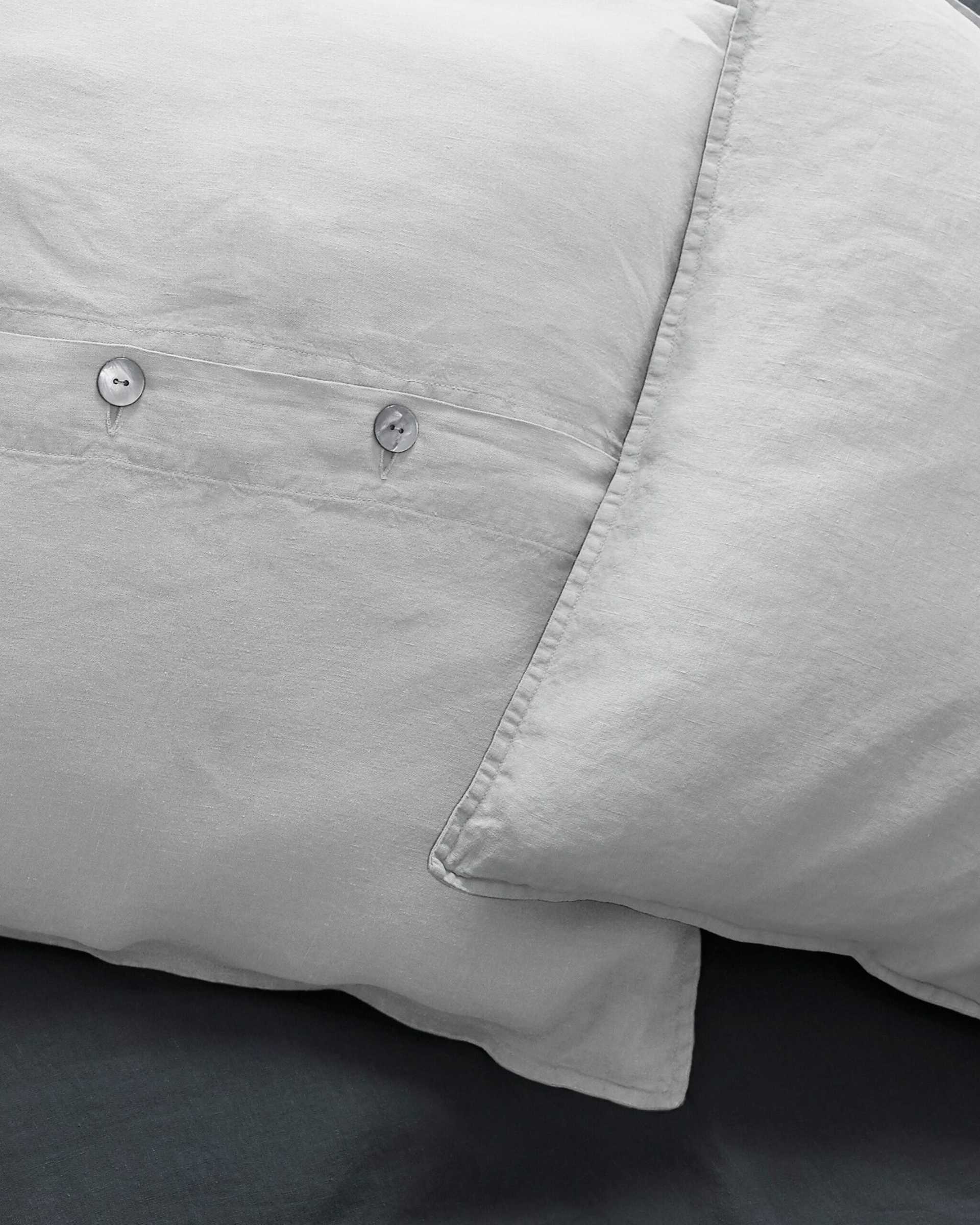
Texture is the quiet workhorse of layered bedding and home styling. Two pieces in nearly the same shade can look distinct when one has a smooth, close surface and the other has a more visible weave or a gently rumpled finish. In a calm bedroom, a linen throw can bring tactile variation to smooth sheets without introducing a strong pattern. In a living space, it can balance upholstery that feels visually uniform or give a clean-lined sofa a more relaxed character.
Look closely at how the surface catches light and how the cloth responds to handling. Linen may show natural variations in yarn and weave; these are part of its visual character, not necessarily signs of damage. Some finishes appear crisp and structured, while others feel softer and more relaxed. If you are comparing options in person, handle the fabric and let it fall over your arm. If shopping from a description, use the stated material, construction, finish, and care details as clues, while remembering that product language alone cannot fully convey a fabric’s hand.
Layering works best when textures differ in scale or character. A finely woven sheet can sit beneath a more pronounced throw; a smooth duvet cover can be paired with a softly textured cushion cover. The effect should feel considered, not crowded. If several pieces already have visible stripes, checks, or elaborate details, a quieter throw can provide a visual pause. Conversely, a plain bed or sofa may welcome a more expressive weave or a restrained stripe.
Choose weight for comfort and drape
Weight is both a practical and visual decision. A light throw is easier to fold, carry from room to room, and store in a small space. It can make a useful layer in mild weather or add a soft finishing touch without noticeably changing the feel of a bed. A heavier textile often appears more substantial and may offer a cozier sense of coverage, but it can take up more room and may be less convenient for everyday handling.
Do not assume that a heavier fabric will automatically be warmer or better. Warmth depends on several factors, including construction, weave, the layers beneath it, and the conditions in the room. Think about how you prefer to feel under a textile: lightly covered, comfortably wrapped, or supported by a more substantial layer. Also consider whether the throw will be used over other bedding. The combined effect of a sheet, blanket, duvet, and throw can become too warm, even when each layer seems light on its own.
Drape gives weight its visible expression. A fabric that falls softly can follow the contours of a bed or sofa, creating a relaxed line. A firmer textile may hold a fold and look more tailored. To style a bed, try folding the throw lengthwise and placing it across the foot, or arrange it loosely at one corner for an informal finish. On a sofa, a neat fold looks deliberate; a casual drape feels inviting. Either approach works when it suits the room’s overall character.
Build a color relationship, not a matching set
Color can make a throw blend quietly into its surroundings or become the room’s focal point. For a restful palette, start with the main colors already present in the bedding, upholstery, walls, and floor. A throw close to one of those tones can create continuity. It does not need to match precisely: a neighboring shade can add dimension while keeping the room calm.
Contrast offers another route. A deeper or warmer color can anchor pale bedding, while a light throw may lift a dark sofa. If the room already contains strong color, a neutral layer can steady the composition. If the palette is mostly neutral, a muted accent can make the arrangement feel more individual without overwhelming it. Consider how natural and artificial light change the color through the day; a shade that seems subtle in bright light may read more strongly in a dim room.
Patterns deserve the same attention. A striped throw can introduce rhythm, particularly when paired with plain bedding. It is often helpful to vary pattern scale: a broad stripe can sit comfortably with a small, quiet motif, while several high-contrast patterns may compete. If your bedding is already patterned, an unpatterned throw can give the eye somewhere to rest. The aim is not perfect coordination but a relationship that feels balanced from across the room.
Layer throws with blankets and decorative pillow covers
Layered comfort comes from combining pieces with different functions. Sheets sit closest to the body; blankets and duvets provide much of the bed’s warmth; throws offer flexible coverage and a finishing texture. Decorative pillow covers add another surface and can help connect the throw to the rest of the room. Thinking in these roles prevents a bed from becoming a pile of textiles that look attractive but are inconvenient to use.
For a simple bed arrangement, begin with a calm foundation of sheets and a duvet. Add a throw across the foot, then use pillow covers to echo one detail from it: perhaps a similar color, a related stripe, or a contrasting texture. Keep the number of competing elements modest. A linen cover with a restrained pattern, such as The Patagonian Stripe Pillow Cover, can provide a graphic note alongside a more understated throw. Its black and old rose stripes on an ecru ground make it a potential companion for neutral bedding, though the room’s existing colors should guide the final pairing. The cover is sold separately from its insert, so account for that when planning the arrangement.
In a living room, use the same principle at a smaller scale. A throw on the sofa can repeat a tone found in a cushion, rug, or nearby artwork, while the cushion introduces a different weave or pattern. Leave some upholstery visible; visual breathing room helps each textile read clearly. If the throw is regularly used, make sure it can be removed and replaced easily rather than arranged so carefully that using it feels like undoing the whole room.
Check care requirements before deciding
A beautiful throw earns its place through use, and care is part of that decision. Read the manufacturer’s instructions for washing, drying, and ironing before buying. Linen care varies by product and finish, so a general rule should never replace the label. Some items may be suitable for machine washing on a gentle cycle; others may require different handling. Water temperature, drying method, and the risk of over-drying can all affect the fabric’s feel and appearance.
Consider whether the recommended routine fits your household. If the throw will be used every day, a care process that feels manageable is more likely to be followed. Wash similar colors together when instructed, avoid harsh bleaching agents unless explicitly permitted, and do not overload a washing machine. If line drying is suitable, allow enough space for the fabric to dry evenly. If the care guidance permits a tumble dryer, follow the stated setting and remove the piece promptly when recommended.
Linen’s surface may soften with use and laundering, but the pace and degree of change depend on the cloth and its finish. Wrinkles and natural irregularities are often part of linen’s relaxed appearance. Ironing is a matter of preference as well as instruction: some people prefer a smoother finish, while others appreciate a more lived-in texture. If ironing is recommended, follow the care label and use the suggested conditions. Good care is less about making linen look pristine than about preserving its usefulness without fighting its natural character.
Plan for storage and everyday access
A throw should be easy to find when the room turns cool and easy to put away when it is not needed. Before choosing a substantial piece, think about where it will live between uses. A folded throw can sit on a shelf, in a basket, or at the end of a bed, provided the storage area is clean and dry. In a small home, a lighter textile that folds compactly may be more practical than a bulky layer that has no clear place to go.
For longer storage, make sure the throw is clean and completely dry, then fold it without forcing sharp creases if you want to reduce hard fold lines. Avoid leaving it in a damp or cramped space. If the textile is used often, a simple open basket can keep it accessible; if it is primarily decorative, a shelf or linen cupboard may suit it better. Storage is not merely a housekeeping detail. It shapes whether a throw becomes part of daily life or remains an object that is too inconvenient to use.
A practical checklist for choosing
Before settling on a Libeco throw, move through a short set of questions. The answers help translate a general preference for linen into a choice that works in a particular room.
- What is its main job: warmth, decoration, flexible coverage, or a combination?
- Will it be used on a bed, a sofa, or in more than one room?
- Does its weight suit the climate, season, and other bedding layers?
- Will its texture complement the sheets, blanket, upholstery, and pillow covers already in place?
- Does the color support the room’s palette, or provide a deliberate point of contrast?
- Are the size and drape appropriate for the furniture and the way people use it?
- Can you follow the care instructions and store the throw conveniently?
Let the room remain lived in
Layered comfort is not a fixed arrangement. A throw may be folded neatly in the morning and gathered over a lap by evening. A bed can be made with a smooth, ordered finish one day and left more relaxed the next. Linen suits this changing rhythm because its texture does not depend on appearing perfectly flat. Rather than treating every crease as a flaw, consider whether the overall effect feels comfortable and intentional.
The most successful choice brings together use, material, and setting. Texture gives the room depth; weight determines how the throw feels and falls; color links it to the larger palette. Care and storage keep it practical. When those considerations work together, a throw becomes more than an accent. It becomes a familiar layer—ready for a cool evening, a slow morning, or a quiet moment at the end of the day.
Choose with the room you have, not an imagined catalogue scene. A Libeco throw should complement the bedding and decorative pillow covers around it while remaining easy to reach, use, and care for. The result is layered comfort with a human scale: tactile, adaptable, and at home in the everyday life of the room.